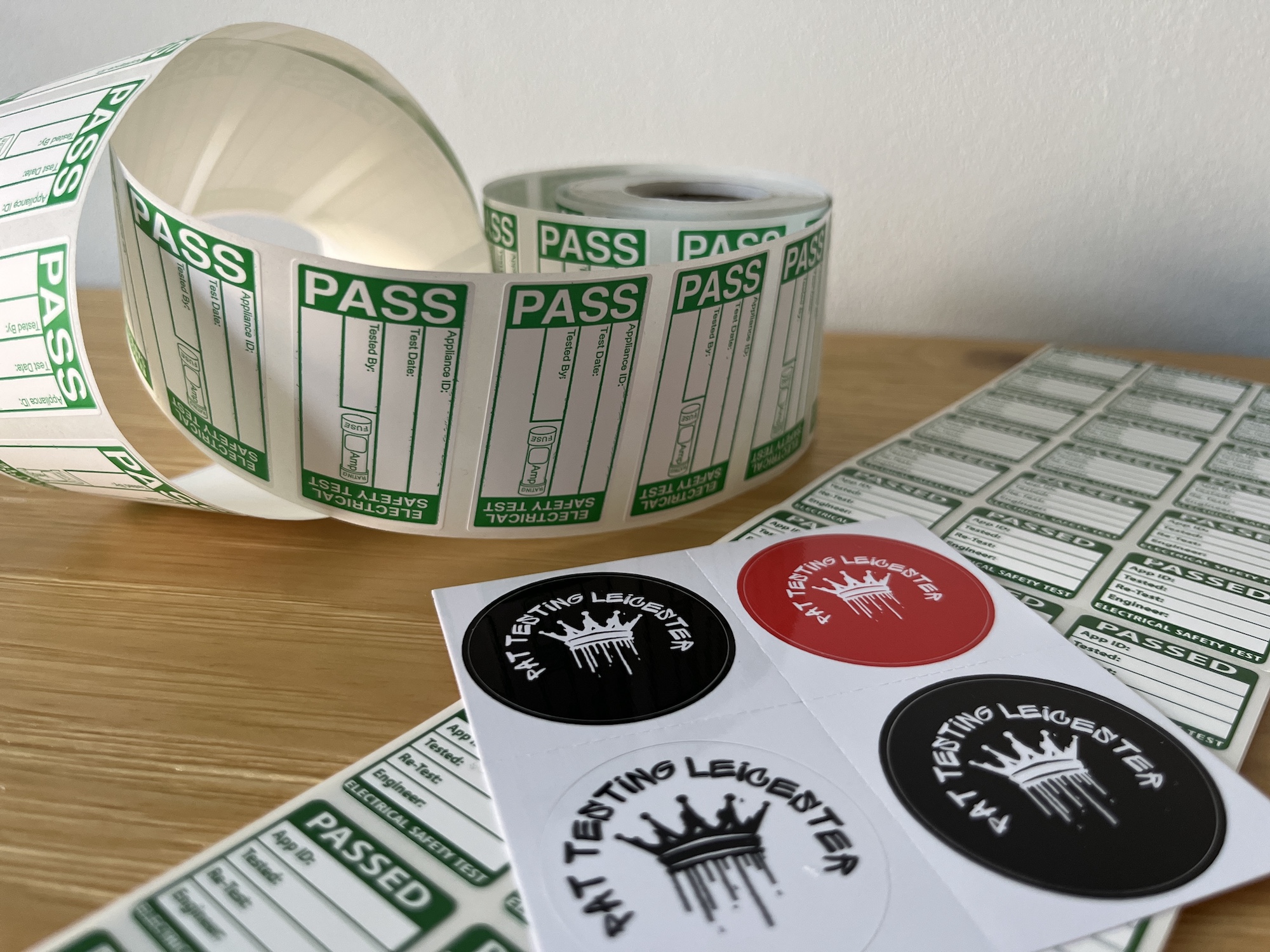

We’ve all seen them. Little stickers on plugs and electrical appliances, often with a date and a pass or fail result.
But what does a PAT Testing sticker actually tell you? And is it enough to have one on your equipment?
What information is on a PAT Testing sticker?
A PAT Testing sticker can help identify an appliance and show that it has been inspected or tested. Depending on the sticker used, it may include a test date, a result, an identification number or a recommended retest date.
It’s a useful visual reference, particularly in workplaces with lots of electrical equipment. You can quickly see that an appliance has a testing history without having to dig through a folder of paperwork.
However, a sticker only tells you what is printed on it. It doesn’t tell you everything about the appliance, the checks carried out or its current condition.
Does a sticker mean an appliance is safe?
Not necessarily. An appliance can be damaged after it has been tested. Cables can become frayed, plugs can be damaged and equipment can develop faults through everyday use.
A sticker isn’t a substitute for checking equipment regularly, looking out for visible damage and reporting anything that doesn’t look right.
Likewise, a sticker showing a future retest date shouldn’t be treated as permission to ignore an obvious problem. If something looks damaged or behaves unusually, stop using it and get it checked.
Electrical safety is an ongoing responsibility, not a date on a label.
What about the PAT Testing report and certificate?
This is where the paperwork matters. When I carry out PAT Testing, I provide a (PDF) report and a certificate, alongside the stickers.
The report records the details of the testing carried out and the results for the appliances included. This gives you a useful record of what was checked and helps you identify any items that need attention.
The certificate provides supporting documentation for your records, confirming the testing service undertaken.
Keeping these documents together means you have more than a collection of stickers on plugs. You have records you can refer back to, whether you’re checking an individual appliance, reviewing your equipment or keeping your workplace safety documentation organised.
It’s worth keeping your report and certificate somewhere accessible, rather than relying on the labels alone.
And what about branded PAT Testing stickers?
You might also come across stickers featuring a PAT Testing company’s logo or contact details.
These can serve a marketing purpose, helping people identify who carried out the testing. They’re different from the information that demonstrates what was tested, when and the results recorded.
I also offer (very lovely) branded stickers featuring my own logo. They’re useful for visibility and recognition, but they don’t replace the test results, report or certificate.
A logo on a sticker is branding; the testing records provide the detail.
Keeping your electrical safety records in order
For businesses and organisations, good record-keeping makes it easier to keep track of equipment and any action that needs to be taken.
Keep your reports and certificates safe, make sure damaged equipment is dealt with promptly, and don’t assume that an appliance is fine simply because its sticker looks up to date.
And remember, PAT Testing is one part of a wider approach to electrical safety. The checks needed, and how frequently they should happen, depend on the equipment, how it’s used and the conditions in which it operates.
The takeaway? Stickers are useful, but they’re not the whole story. The report, certificate, condition of the appliance and ongoing checks all have a part to play.
Rebecca provides straightforward, onsite PAT Testing for businesses and organisations across Leicester and Leicestershire.
…