
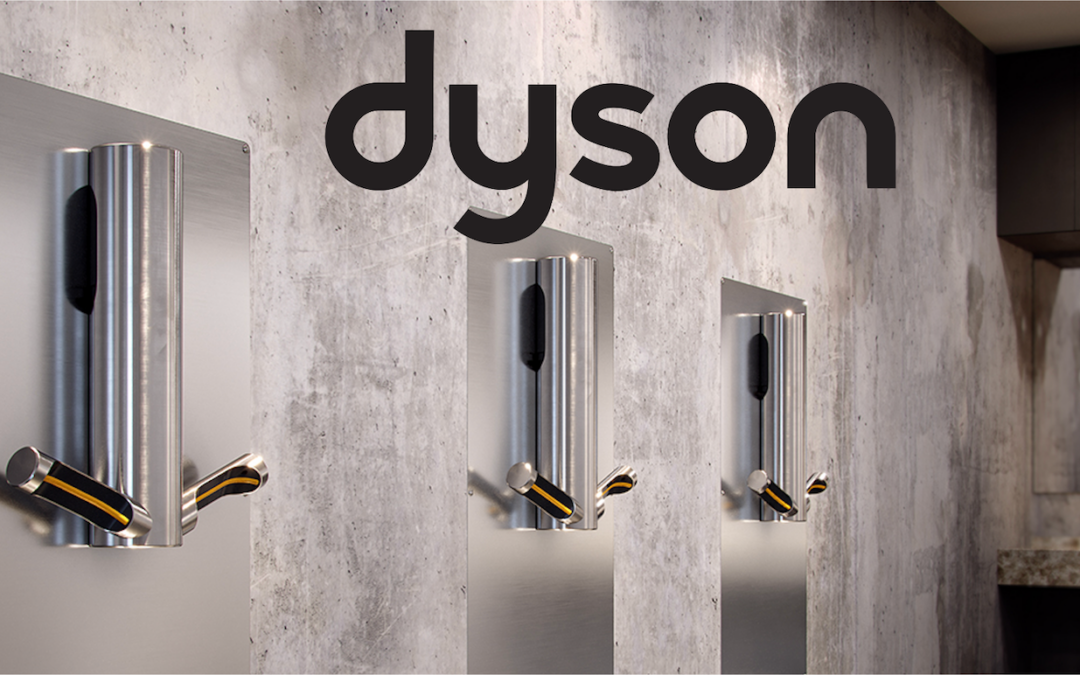
Dyson products are clever bits of kit (I’m an ex John Lewis Section Manager, so I know!). Sleek, powerful, and often bolted to the wall like they’re part of the building itself. And that’s exactly where the confusion creeps in.
Hand dryers, air purifiers, wall-mounted fans, hair dryers in hotels… they look “installed”, so they often get mentally filed under electrician territory and quietly skipped during PAT testing.
That’s a mistake. A very common one.
Fixed to the Wall Does Not Mean Exempt
PAT Testing isn’t about whether something moves. It’s about whether it’s electrical equipment used in a workplace.
Many Dyson products — including the very popular Dyson Airblade hand dryers — are classed as portable or semi-portable electrical appliances, even when fixed to a wall. They plug into a fused spur or isolator and are still very much electrical equipment that can deteriorate, fail, or become unsafe over time.
Being wall-mounted does not magically make them immortal.
“Isn’t That the Electrician’s Job?”
This is where wires get crossed (pun fully intended).
- Installation → electrician
- Ongoing safety checks → PAT testing
Once the appliance is installed and in use, it still needs regular inspection and testing as part of your electrical safety regime. PAT testing complements fixed wiring tests; it doesn’t replace them, and it isn’t replaced by them either.
Electricians test the building.
PAT testers test the appliances people actually use.
Dyson hand dryers get used a lot. And by the general public. Daily. Sometimes enthusiastically.
Why Dyson Products Should Be Included in PAT Testing
Dyson units often operate at high power, run frequently, and live in environments with moisture, heat, and heavy use — think toilets, gyms, leisure centres, schools, cafés and offices.
That combination means:
- Wear and tear happens
- Connections can loosen
- Internal components can degrade
- Safety can be compromised without visible warning
Regular PAT testing helps identify issues before they become a problem — or an insurance claim.
What About Manufacturer Guidance?
Dyson recommends regular inspection and maintenance of their products. PAT testing forms part of a sensible maintenance programme and helps demonstrate that you’re taking reasonable steps to ensure electrical safety.
If there’s ever an incident, having documented PAT testing shows due diligence. Not having it invites uncomfortable questions.
The “Forgotten Appliance” Problem
In many workplaces, Dyson units are the most commonly missed items during PAT testing because:
- they’re fixed to the wall
- they’re not on desks
- they’re not moved
- no one quite knows who’s responsible for them
Which makes them exactly the sort of appliance that should be checked.
If it uses electricity and is used as part of your business, it deserves a look.
In Short
Yes — Dyson products such as the Airblade should be included in your PAT testing schedule where applicable.
Wall-mounted does not mean worry-free.
Installed does not mean exempt.
And “we’ve always done it this way” is not a safety strategy.
Electrical safety lives in the boring details — and that’s where PAT testing quietly earns its keep.