
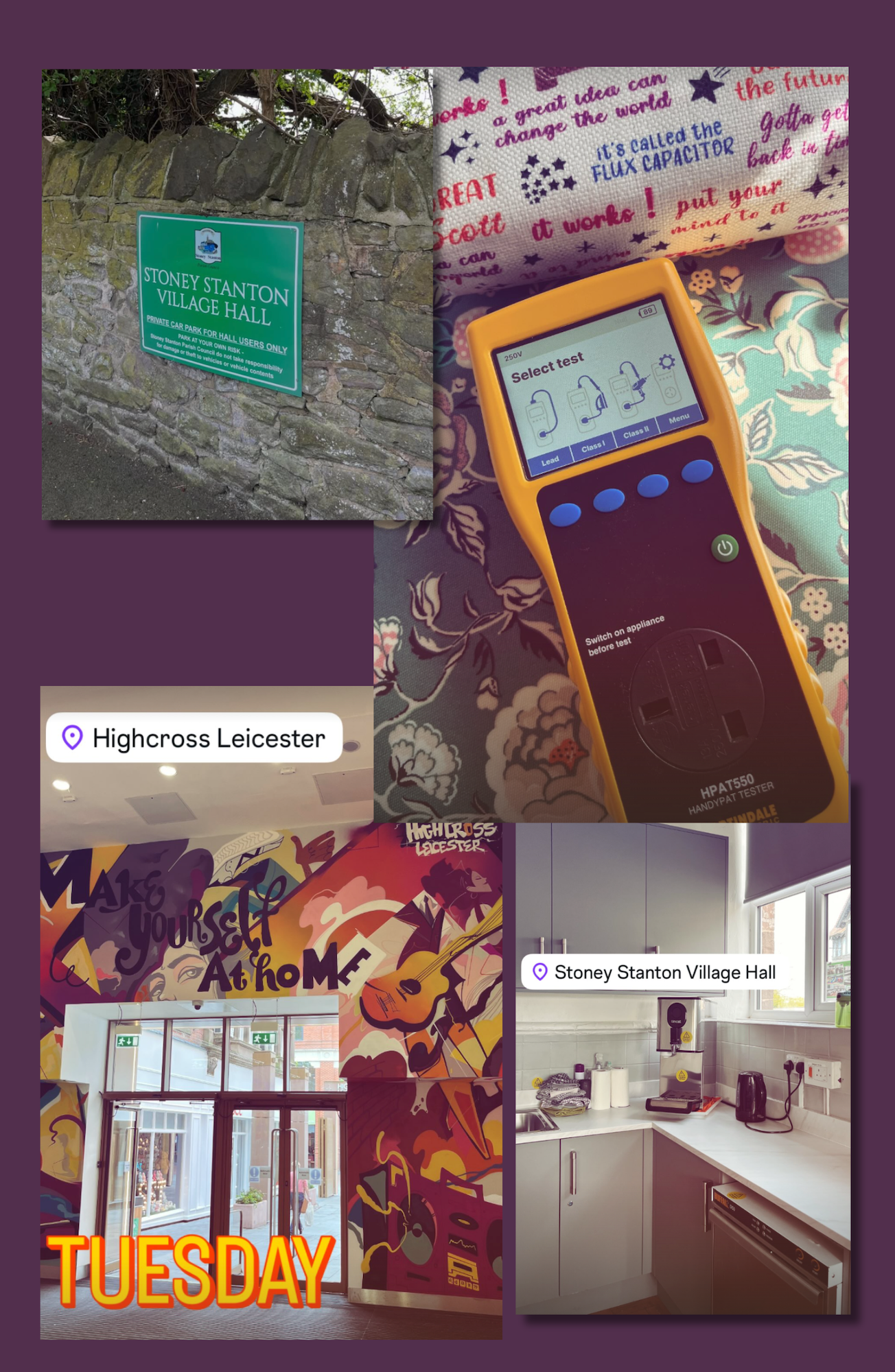
Recently, I’ve been out and about carrying out more onsite PAT Testing across Leicester and the surrounding areas — including a lovely local Village Hall (of Stoney Stanton!) and an innovative business based at LCB Depot, where I was able to deliver testing onsite within the workspace itself.
One thing I’m already noticing? Every workplace is completely different (and people like to chat too). From community spaces and offices to salons, workshops, and creative studios, the types of appliances being used — and the questions people ask — can vary massively.
…
My Dyson hairdryer… “Why doesn’t this have an earth?”
At first glance, it can feel a bit alarming. After all, hairdryers are powerful electrical appliances used all day, every day in busy salon environments. Surely they should have an earth connection for safety?
Not always. Many modern salon appliances — including Dyson hairdryers — are designed as Class 2 appliances, which means they are built differently from traditional electrical equipment. Weird…
So, what is a Class 2 appliance?
A Class 2 appliance is designed with double insulation. Instead of relying on an earth wire for protection, the appliance has extra layers of insulation built into its construction to prevent electric shock.
That means:
- No earth wire is required
- The plug may still look standard
- PAT test results will show “No Earth” — and that is completely correct
In fact, if a PAT tester expected an earth on a Class 2 appliance, that would actually suggest a misunderstanding of how the equipment is designed. You’ll often spot Class 2 equipment by the symbol of a square inside another square on the appliance label.
Why are hairdressers seeing more Class 2 equipment?
Modern salon equipment is becoming more advanced, lighter, and more portable. Manufacturers like Dyson design appliances with safety and usability in mind, particularly in environments where equipment is constantly handled, moved, unplugged, and used near water or styling products. Class 2 construction helps reduce risk while keeping appliances practical for professional use. And it’s not just hairdryers.
PAT Testing is about understanding the appliance — not just plugging in a machine
A proper PAT test is more than simply attaching stickers. Different appliances require different testing methods, and part of the job is understanding:
- Appliance classification
- Visual inspection standards
- Cable condition
- Fuse ratings
- Safe operation
For example, a failed earth reading on a Class 1 kettle could indicate a serious issue. On a Class 2 Dyson hairdryer, “no earth” is exactly what you’d expect to see. That’s why professional onsite PAT testing matters — CONTACT ME TODAY — especially in busy workplaces like salons where equipment works hard every single day.